The Power of Peptides: What Are Peptides in Skincare and How Do They Work?
Not all peptides work in the same way. From signal peptides to carrier peptides and expression-line smoothing formulas, discover how different peptide types support different skin concerns, with expert insight from Face...

Peptides are often talked about as firming ingredients, but they can do much more than support the look of our fine lines.
In skincare, different peptides can be used to target a whole range of different skin concerns, from firmness, texture or redness to uneven tone or barrier support. Below, we asked our skin experts to explain what peptides in skincare are and their approved peptide products.
What are peptides in skincare, and how do they work?
Peptides are short chains of amino acids. But let's catch you up first: Amino acids are essential building blocks for proteins (think collagen and elastin) found naturally in the skin. These proteins help give skin its firm, smooth and supple appearance.
As Suzanne Fleming, our skin expert, explains:
“Peptides are small chains of amino acids that can be designed and put together to be cell communicators. So we can have different peptides to create different actions in the skin. They’re formulated to make changes to the skin.”
In skincare, this means peptides can be used to send specific messages to the skin. Depending on the peptide and the product it is used in, that message might be to support collagen, improve the look of firmness, calm visible redness, target uneven tone or support the skin barrier.
What do peptides do in skincare?
As we know, peptides can support the skin in several ways, depending on how they have been formulated.
They are often included in skincare to help:
- Support collagen and elastin
- Improve the look of firmness
- Soften the appearance of fine lines
- Support smoother-looking texture
- Calm the look of redness
- Encourage a more even-looking tone
- Support skin that feels compromised or less resilient
A formula designed for fine lines may use a different peptide than one created for redness or pigmentation.
The main types of peptides in skincare
Signal peptides
Signal peptides help encourage the skin to support proteins such as collagen and elastin. They are often found in products designed to improve the look of firmness, elasticity, fine lines and skin texture.
“If you’re looking for signal peptides, Matrixyl 3000 is one to look out for in formulas focused on collagen support. Matrixyl Synthe’6 is another, and you’ll often find it in products designed to support type I collagen, including some Environ formulas.” - Suzanne
Carrier peptides
Carrier peptides help transport important trace elements, such as copper, to the skin. In skincare, they are often used in formulas created to reduce inflammation, support repair, nourishment and overall skin resilience when skin needs extra support.
Enzyme-inhibitor peptides
Enzyme-inhibitor peptides are used to help preserve the skin’s structure by slowing the processes that contribute to the breakdown of collagen and elastin.
They are often included in formulas designed to support firmness, elasticity and the visible signs of ageing over time. An example of this is also Matrixyl 3000.
Neurotransmitter-inhibitor peptides
Neurotransmitter-inhibitor peptides are used in formulas that focus on the look of expression lines. They are often associated with a smoothing effect, helping the skin appear more relaxed. Consider this your very own peptide-style Botox.
Expert-picked peptides
“There are hundreds of different peptides, which is why peptide skincare can be so varied. HydroPeptide, for example use over 65 clinically proven peptide complexes formulated to offer maximum efficacy, but most peptides fall into a few key groups depending on how they support the skin.” - Suzanne
Matrixyl 3000
What our expert says: Often used in skincare focused on collagen support, firmness and fine lines.
Suzanne recommends:
Medik8 Liquid Peptides

SkinCeuticals A.G.E. Advanced Eye

Minimalist Multi-Peptides 10% Face Serum

Matrixyl Synthe’6
What our expert says: This peptide is highlighted by Suzanne for its support of type I collagen and can be found in Environ products, among others.
Suzanne recommends:
Environ Youth EssentiA (C-Quence) Vita-Peptide Eye Gel

Environ Focus Care Youth+ Tri-Peptide Complex Avance Moisturiser

Tetrapeptide-14
What our expert says: This is a peptide that is used to offer cell communication to soothe and reduce redness.
Suzanne recommends:
mesoestetic Age Element Anti-wrinkle Concentrate

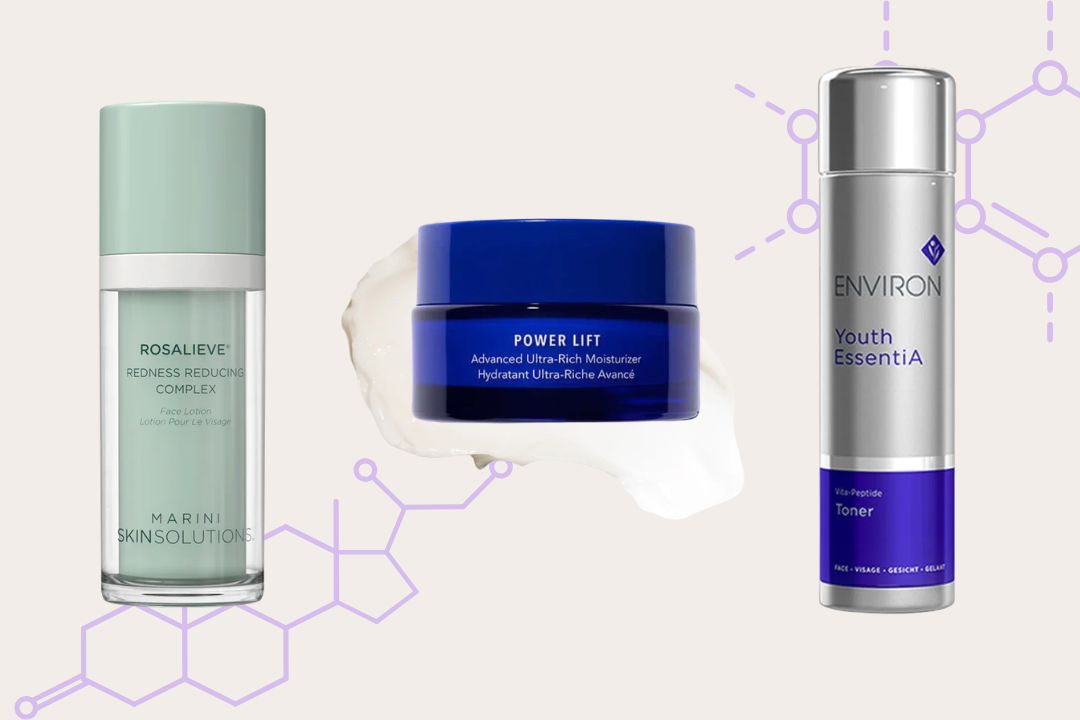
Environ Youth EssentiA (C-Quence) Vita-Peptide Toner

Dermalogica Awaken Peptide Eye Gel

Marini SkinSolutions RosaLieve

HydroPeptide is also a key brand to know if you are interested in peptide-led skincare, as the brand formulates with more than 65 peptide complexes. Suzanne's top pick is...
HydroPeptide Power Lift Advanced Ultra Rich Moisturiser

How to add peptides to your skincare routine
Peptides are usually easy to introduce into your routine, especially in serum form. Apply your peptide product after cleansing and before moisturiser, allowing it to absorb before layering the rest of your skincare. In the morning, always finish with SPF.
As Suzanne explains:
“Peptide products can fit into most routines, but the formula should reflect what you want to support in the skin. A peptide product for firmness may look different to one designed for redness, uneven tone or overall skin resilience.”
Explore our expert-approved peptide skincare at Face the Future, or speak to our skin experts for personalised advice on the best peptide product for your skin.